

Facts! Stats! Dates! Data! Evidence! In order to move and make decisions, ecological management hinges on gathering of raw objective, impartial, out-there data. In this session, we’ll explore how this ‘raw’ data is in fact…always cooked.
We will sieve through the ways we write ourselves into the research…and the research writes itself on us. How might your fieldwork be vegetalising you, crystalising you, pollinating you, soaking you and how might recognising that transform our work?
We will take inside and outside walks with our questions asking how, who, what is shaping them. We will attempt to catch data that might edited out, suppressed, overlooked and make them edible.
In the company of more-than-human and other-human companions we’ll simmer what would happen if paths forward walked themselves into soily existence?
Session Pack
Welcome Artecologists!
Thanks so much for applying to join our second research club meeting: Cooked data and being-walked as a form of research.
Below you’ll find some additional useful info and some short readings / thought starters that are highly encouraged to help you make the most of your time in the session.
1 — Essential info
2 — Club members
3 — What to read
4 — What to prepare
5 — Consent form
1 — Essential Information
Date: Wednesday 27 November 2024
Time: 11am-2pm (doors open 15mins before)
Location: London Interdisciplinary School 20-30 Whitechapel Road London E1 1EW
Google maps link: https://maps.app.goo.gl/ruXmfeHywVqn8W9V8
Nearest tubes in order: Aldgate East, Aldgate, Whitechapel
Doors will open around 10.45am so folk have time to make a tea and get settled before we will start promptly at 11am. Please head to reception for sign in.
Contacts : beckyl.lyon@googlemail.com, 07828644678
If you have not already shared dietary requirements or accessibility requirements please do so by Monday 25 November so we can make provisions.
2 — Club members
Once again, we have a real richness of voice in the room! Click the plus arrow to drop down for more detail.
-
She / Her
An arts practitioner and arts worker, enthused by the magic of the natural world in the many forms that it comes in. A current doctoral student researching embodied land practices and a student of psychedelic facilitation - aiming to understand how plant and fungi worlds can liberate and reconnect our bodies.
-
He/They
www.lis.ac.uk, www.linkedin.com/in/ashbrockwell
I'm a transdisciplinary academic, artist and songworker, and Problems-Based Learning Lead at The London Interdisciplinary School. My research interests include transformative education, ecopsychology, environmental anthropology, ecology / ethnoecology, and the role of the arts in mental wellbeing and in promoting emotional connection with habitats and the species that live there. I enjoy working with acrylics, mixed media, found objects, and land art.
-
She / Her
https://www.elasticfiction.co/
https://www.instagram.com/elastic_fiction/
https://www.linkedin.com/in/becky-lyon/
Becky Lyon is a London-born and based English-Jamaican artist and researcher. Her art practice explores methods for coming into relationship with and eliciting insights from ecology, particularly within ‘urban’ spaces, to unearth how our socio-political worlds are and could be shaped. Recurring themes in her work are sensing bodies, tactile processes and the touchy-feely; earthly curriculums and counter-currents; power relations and possibling; softness, oozing and slippery edges; intimacy and quiet resistance. Her work manifests as installations, rituals, photographic objects, handmade moving images and text. She is interested in alternative forms of ecological stewardship and founded Grounded Ground Provisions - an artist-led, schooled-by-the-forest for grown ups and the the Squishy Sessions research collective. She is a volunteer ranger for London National Park City active across Barnet, Brent and Harrow. She has an MA Art & Science from Central Saint Martins, an MA Art & Ecology from Goldsmiths University of London. She is a PhD researcher at The Centre of Art and Ecology at Goldsmiths with the topic ‘Touch as method: the artist as ecologist and feeling-for other(ed) conservation cultures in England’. She side-hustles as a consultant and trends researcher for global brands.
-
She / her
Ishwari is an artist and one half of collaborative practice Kneed. She works with moving image, sound, and print to explore collective histories, imaginations, systems of care, and resistance held within the ecologies she finds herself in. I would love to learn more about how we can imagine, dream up, dig into, be curious about, observe and be with the sticky, layered, complex lands we live within - especially in the belly of the beast that is this country. I am interested in collective histories of resistance and care - shared by the human and more than human, and what is felt within the in-between spaces.
-
She / Her
@kirstybadenoch
I am an artist, researcher and educator working with fragile and disturbed landscapes, communities and ecologies. I draw, design, make, talk, write, perform and plant. I engage with interdisciplinary, alchemic and messy site-based processes. I occupy the intertidal zone whenever possible, acting as a conduit for exchange. I've worked with clients and partners including National Trust, UCL, Essex Cultural Diversity Project, and various councils across London. I teach Architecture and Interdisciplinary Studies, Landscape Architecture and Research by Design at The Bartlett School of Architecture. I curate Microscope, a small experimental gallery in Dalston.
Through all of these things, I seek to interrogate situations of environmental injustice and advocate toward a shared ecological future. -
He / Him
https://nationalparkcity.london/
Louis (Lou) is passionate about regenerative design and building resilient communities. As a consultant he works with the Carbon Free Group on rewilding sites in Sussex & Kent as well as in London as a director of several sustainability projects including The River Roding Trust, the Cob in the Community natural building practice and as an associate of the SEADS.network. In 2015, he graduated with an MSc/Dip in Urban Regeneration from the Bartlett, UCL. He was awarded the Santander Universities Community Contribution award and was a finalist in the Mayor of London/Siemens Low Carbon Entrepreneur Prize.
-
He / Him
www.bethnalgreennaturereserve.org
Michael Smythe is an artist, farmer and the creative director of Nomad Projects, an independent arts foundation known for developing experimental projects in both digital and location-specific spaces.
His work focuses on blending cultural activities with ecological and social themes, creating projects that aim to connect communities with the natural world found within the city. Ongoing projects include the Bethnal Green Nature Reserve (www.bethnalgreennaturereserve.org), Urban Mind (www.urbanmind.info) and NatureBoost (www.natureboostproject.com). -
@mother_matter - website under decolonialistion
Pati Starzykowski (b.1982) is an artist and transdisciplinary researcher who works and produces at the intersection of art, science, ecology, and politics. Working with rescued, repurposed, and living materials, Pati‘s work addresses the question of perceived and actual value, resilience, and resistance in transient zones of encounter, with a focus on peri-urban communities. Pati graduated with MA in Art and Science, from Central Saint and is currently a PhD candidate at the School of Design and Architecture, University for Creative Arts Canterbury researching weeds as affective ecologies, contextual and queer ecological models of resilience for socio-spatial practices.
-
She / Her
www.i-am-ai.net / www.whenthefuturecomes.net
I am an award winning artist, researcher and creative educator. I currently work as a practicing artist and an Associate Researcher at Horizon Digital Economy, University of Nottingham. I have toured nationally and internationally and publish and present regularly in academic and non-academic contexts. I co-founded the award winning artist-led collective Active Ingredient in 1996 and Mudlark games company in 2007 and co-produced a series of British-Brazilian environmentally engaged arts projects between 2007-2017. I completed a Doctorate in Computer Science in 2014, and have been a Visiting Research Fellow at Central St Martins UAL and Associate Lecturer at Birkbeck College. I have developed a longitudinal arts/research project ‘Future Machine & When the Future Comes‘, and facilitate ‘Creating the Future‘ workshops as part of an arts, ecology and music residency in Finsbury Park.
-
She / Her
Culture and Public Art Officer for Barnet Council. We have recently developed a 5 year Arts and Culture Strategy to enable and grow the boroughs creative sector. Barnet is one of the greenest boroughs in London and we have a keen interest in bringing heritage, culture and greenspaces together.
-
She / Her
https://www.gov.uk/government/organisations/natural-england
I am a specialist in climate change adaptation for the natural environment, and I work to place nature, our life support system, at the centre of climate action. I am also exploring how creative and storytelling approaches can help engage on the nature and climate emergency and how this interacts with inclusivity, equity and environmental justice. I am a qualified coach and am working on how the coaching approach and a focus on well-being can help galvanise climate action and support us in our challenging work for nature and climate
3 — What to read
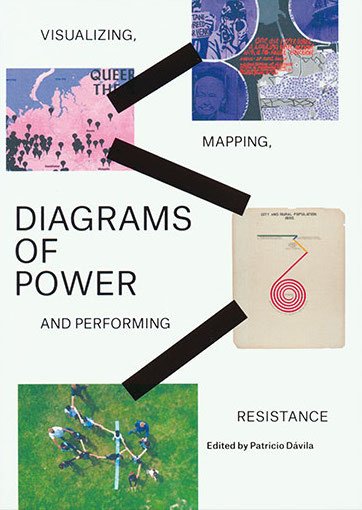
Our juicy reading for this session is a short extract from a longer conversation but is packed with thought-tickling ideas and introduces the idea of “cooked” data as opposed to otherwise “raw” objective data sets:
D’Ignazio, Catherine. Macdonald, Eliana. Mogel, Lize. Pearce, Margaret. (2018) ‘Dialogues One - Intersections in Indigenous Mapping, Feminist Visualization, and Community-building’ in Davila, Patricio. Diagrams of Power: Visualising, Mapping, and Performing Resistance. Netherlands: Onomatopee, pp. 21-25
Make a note of something that:
…resonates with a challenge you are facing in your own work;
…feels like an opportunity;
…sounds confusing / conflicting / nonsense / is something you want to challenger!
4 — What to bring
Bring your responses to the following thought starter - make notes on paper or in your head as you prefer!
a) Think of one question you are working on in relation to how nature is taken care of*. What types of data are you collecting to answer it?
b) Who or what processes are involved in validating it?
We will chew on these responses together in the session.
*Depending on your discipline this might range from a specific site you are working on, a method you are using to teach your students, or something you’re trying to convince your department to assign budget for!
Please bring:
Something to draw on and write with
We will be stepping outside for a short segment of the session so please come dressed for the weather.
5 — Consent form
Please download and sign this consent form. Alternatively I will have copies on site next week if that’s more convenient:
Cooked Data_ The Dept of Artecology_Information sheet & consent form_updated 151124
______________________________________________
Any other questions or suggestions please feel free to contact me at any time otherwise - I look forward to seeing you next week!